invertopia
White Side/Penguin Isopods (Cubaris sp.)
White Side/Penguin Isopods (Cubaris sp.)
Couldn't load pickup availability
Cubaris sp. “White Side” (Penguin)
Origin: Thailand/Cambodia, Southeast Asia (captive-bred)
Temperature: 20–28 °C (optimal ~25 °C)
Humidity: 55–80 %
Adult Size: 8–15 mm (typically ~10 mm)
Difficulty: Easy to Moderate (for Cubaris)
Rarity: Common
Scientific Name: Cubaris sp. “White Side”
Common Names: White Side, Penguin, Pinguin, Orca
Description:
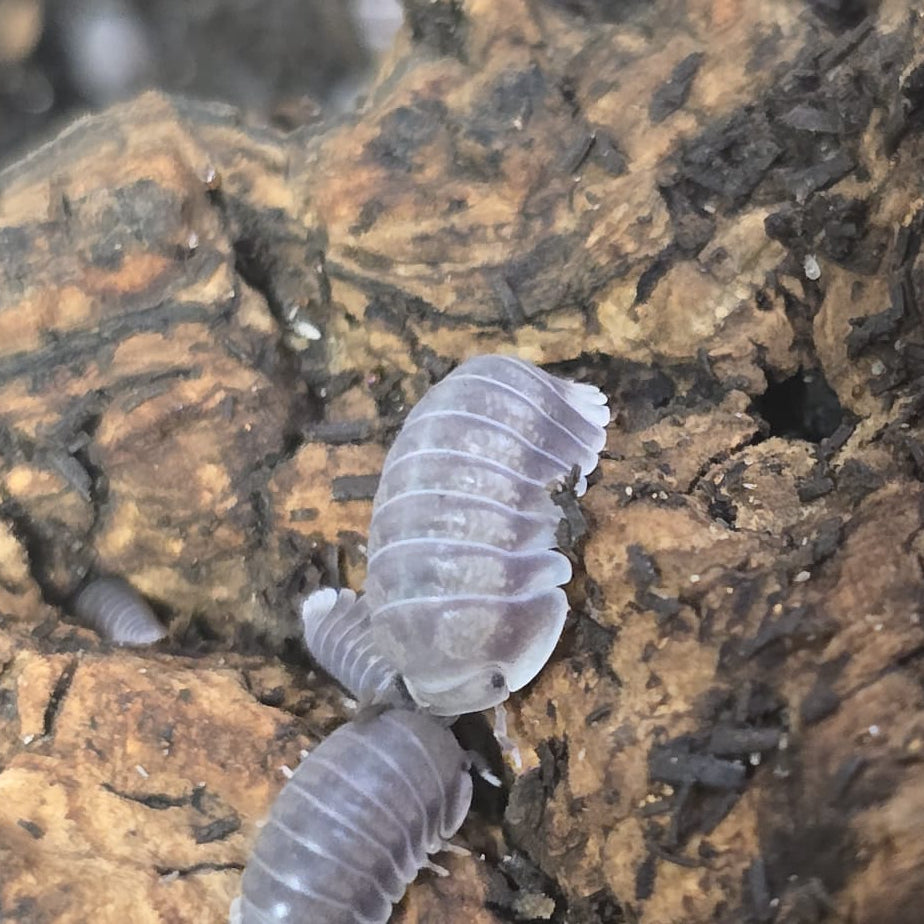
A small, visually striking Cubaris species with a black or dark grey body and crisp white margins, giving it a penguin- or orca-like appearance. Considered one of the easiest Cubaris to keep, it’s hardy, adaptable, and reasonably priced, making it ideal for newcomers to Cubaris species.
Appearance & Behaviour:
- Rounded Cubaris body shape
- Black/dark grey central body with white edges along sides, head, rear, and underside
- Small and moderately visible compared to larger Cubaris
- Capable of defensive conglobation (rolling into a ball)
- Primarily nocturnal; shy and secretive, but more active in large established colonies
- Social, gregarious, and engages in grooming and foraging behaviour
- Burrows in deep substrate to regulate moisture and feel secure
Habitat & Care:
- Enclosure: Plastic or glass terrariums; dark, quiet location preferred
- Substrate: Deep (~15 cm) mix of organic topsoil, sphagnum peat moss, forest humus, decaying hardwood, leaf litter
- Moisture Gradient: ~70 % damp zone, ~30 % drier zone for self-regulation
- Ventilation: Medium; prevents stagnant air without drying substrate
- Décor: Cork bark, hardwood, moss, limestone for hiding and enrichment
- Temperature: 20–28 °C, stable conditions more important than exact numbers
- Humidity: Maintain within 55–80 %; too dry will cause moulting issues
Diet & Nutrition:
- Primary: Leaf litter, decaying wood, forest moss, lichen
- Supplementary: Organic vegetables, occasional fruit, fish flakes/pellets
- Protein: Twice weekly (fish food, dried shrimp, small meat scraps)
- Calcium: Cuttlebone, limestone, oyster shell, crushed eggshells
Breeding:
- Initial establishment is slow; reproduction picks up once colony stabilizes
- Moderately prolific when settled; females carry eggs in marsupium
- Colony growth requires patience in first few months
- Breeding enhanced by stable temperature, humidity, deep substrate, and abundant food
Bioactive Use:
- Contributes to nutrient cycling and waste breakdown in tropical or humid vivariums
- Small size and nocturnal habits mean less visible cleanup activity during the day
- Attractive, hardy species suitable for bioactive setups with compatible humidity
Suitability:
- Good for: Keepers seeking an accessible entry-level Cubaris, tropical vivariums, small display colonies, visually appealing black-and-white morph
- Less suitable for: Beginners unable to maintain humidity, those expecting immediate breeding, keepers wanting large or highly visible species
Care Level: Easy to Moderate for Cubaris; forgiving for a tropical species if humidity and substrate depth are maintained
Share