invertopia
White Shark Isopods (Cubaris sp.)
White Shark Isopods (Cubaris sp.)
Couldn't load pickup availability
Cubaris sp. 'White Shark' (White Shark Isopods)
Origin: Thailand
Temperature: 24–28°C
Humidity: 60–80%
Adult Size: ~8 mm
Difficulty: Easy
Rarity: Common
Product Description:
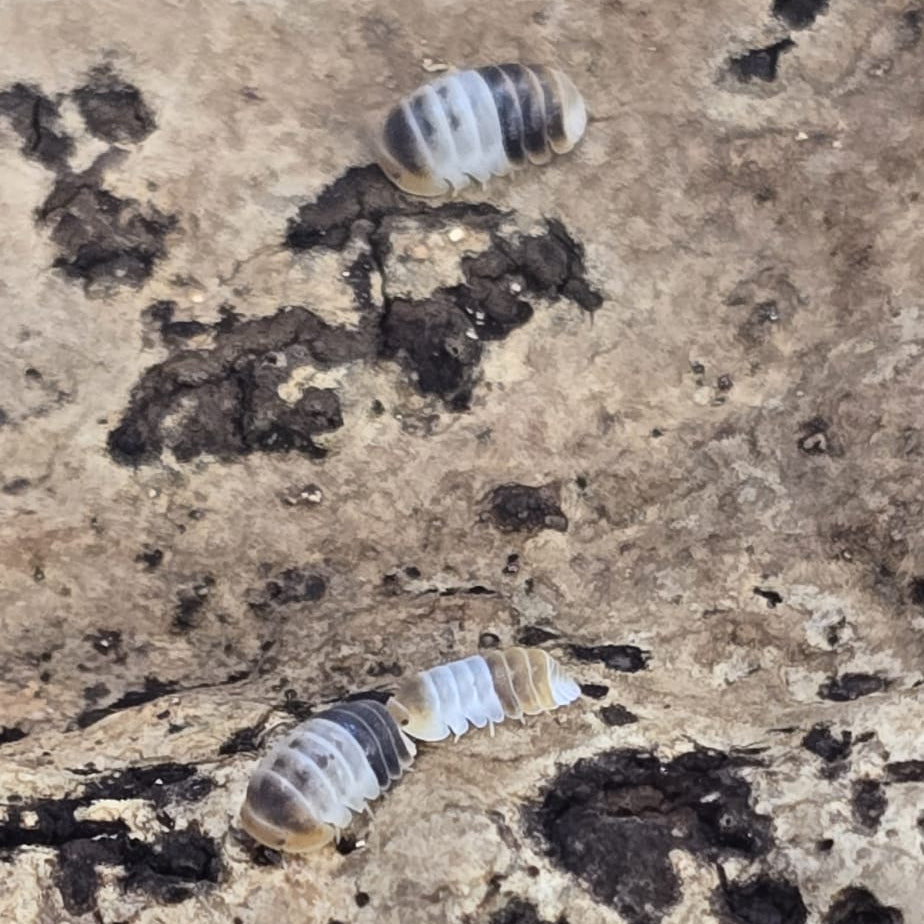
White Shark Isopods are a miniature Cubaris species that pack striking visual appeal into a tiny 8 mm body. Known for their bold tricolour pattern—bright orange “face,” white midsection, and dark blue-black rear—they are both visually stunning and highly prolific. Originating from tropical Thailand, they are ideal for beginners looking to transition into the Cubaris genus due to their forgiving nature, ease of care, and active behaviour.
Appearance & Physical Traits:
- Dwarf species, adults ~8 mm long
- Distinctive tricolour pattern: orange, white, dark blue-black (some variation exists)
- Rounded, segmented body with characteristic Cubaris “duck face”
- Conglobation ability: rolls into a tight ball when threatened
- Compact size makes them ideal for smaller terrariums
Behavior:
- Shy, reclusive, and primarily nocturnal
- Burrow extensively in substrate, particularly during moulting or breeding
- Social; higher-density colonies are more active and visible
- Non-aggressive, suitable for bioactive terrarium setups
- Adults and juveniles cohabit safely
Diet & Feeding:
- Primary foods: Hardwood leaf litter (oak preferred), rotting white wood, sphagnum moss, lichens, forest moss
- Supplementary foods (2+ times/week): Fresh vegetables (carrot, squash, zucchini), fish flakes, dried shrimp/minnows, commercial isopod foods
- Calcium sources: Cuttlebone, crushed oyster shell, limestone, eggshells
- Protein and calcium are critical to support their rapid growth, moulting, and breeding
Breeding:
- Prolific once established, colonies can multiply significantly within 2–3 months
- Females carry fertilised eggs in a brood pouch (marsupium) until hatching
- Juveniles may be raised alongside adults without separation
- Optimal breeding conditions: temperature 26–28°C, humidity 60–80%, deep substrate, constant calcium, regular protein supplementation
- Starter colonies (10–20 individuals) perform best in smaller enclosures for easier breeding
Habitat & Care:
- Enclosure: 6–8 quart plastic tubs or ventilated glass terrariums for starter colonies; secure lids with mesh vents recommended
- Substrate depth: 7–10 cm (3–4 inches) to allow burrowing
- Humidity: 60–80%, roughly 80% of enclosure damp, 20% drier
- Temperature: 24–28°C consistently, avoid fluctuations
- Ventilation: Moderate, small side vents prevent stagnation and mould
- Décor & Hides: Leaf litter, decaying wood, sphagnum moss; burrowing substrate preferred over cork bark
- Avoid waterlogging and direct sunlight
Substrate Mix Recommendations:
- ABG Mix Base: Sphagnum moss, tree fern fibre, orchid bark, peat moss, charcoal; topped with leaf litter, moss, and decaying wood
- Alternative Mix: Coconut humus/coir, mixed soil, bark pieces, orchid moss, sphagnum moss
- Include calcium sources (limestone powder, cuttlebone) and decaying wood to mimic natural habitat
- Keep substrate damp but not wet for optimal burrowing and molting
Bioactive Cleanup Use:
- Efficient detritivores in terrariums, consuming leaf litter, decaying wood, and leftover food
- Burrowing aerates substrate and helps maintain a clean enclosure
- Can serve as a sustainable food source for small, compatible terrarium inhabitants
Value:
White Shark Isopods combine visual appeal, small size, easy care, and prolific breeding. Ideal for beginners wanting a colorful, active species or as part of a bioactive cleanup crew in both small and medium terrariums.
Share