1
/
of
1
invertopia
Skeleton/Nebula Isopods (Armadillidium Klugii)
Skeleton/Nebula Isopods (Armadillidium Klugii)
Regular price
£22.50
Regular price
Sale price
£22.50
Taxes included.
Shipping calculated at checkout.
Quantity
Couldn't load pickup availability
Armadillidium klugii “Skeleton”
Origin: Croatia
Temperature: 18–26 °C (64–79 °F)
Humidity: 60–80 %
Adult Size: ~21 mm
Difficulty: Easy
Rarity: Common
Description:
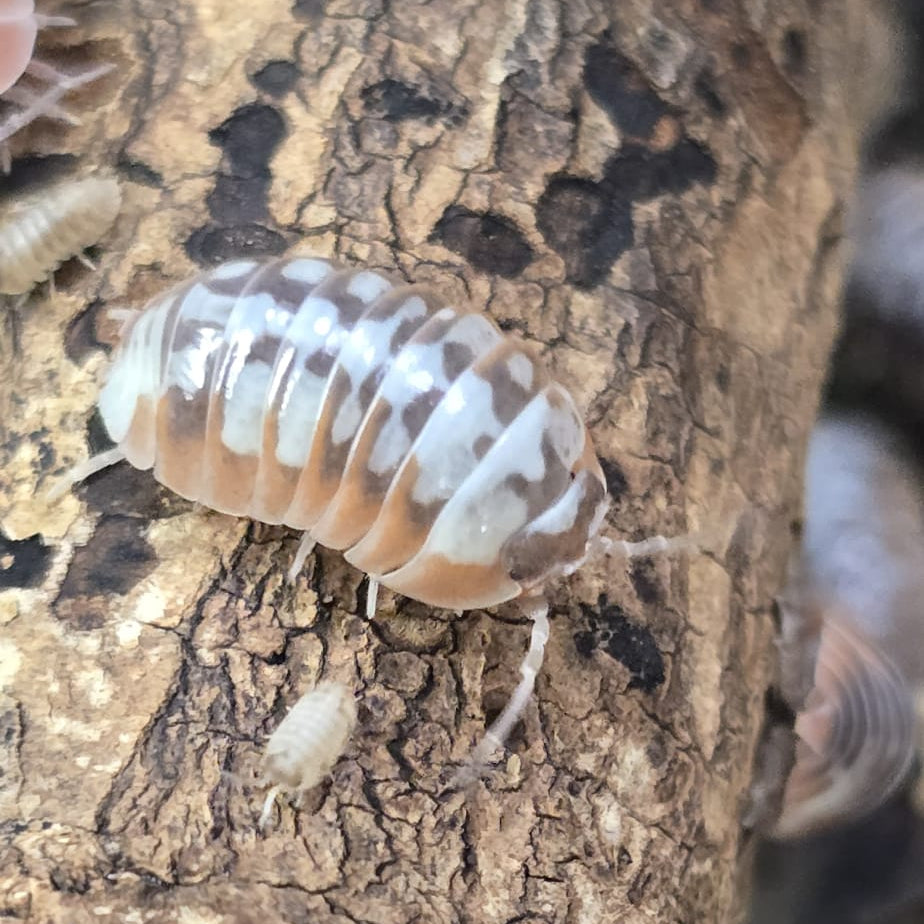
Klugii Skeleton Isopods are named for their striking exoskeleton pattern, featuring reddish-brown tones with white markings reminiscent of a vertebral column. Also called “nebula” isopods when patterns are especially distinct, they are visually appealing and make an excellent display species.
Appearance & Behaviour:
- Medium-sized (~2.1 cm)
- Hard exoskeleton with red outlines and white patch patterns
- Slow to moderate breeders under suboptimal conditions; prolific under ideal conditions
- Burrow actively; prefer a mix of moist and drier substrate areas
- Non-climbing, peaceful, beginner-friendly
- Detritivores and clean-up specialists
Habitat & Care:
- Enclosure: Well-ventilated container with at least 8–10 cm substrate for burrowing
- Substrate: Mix of organic soil, leaf litter, decaying hardwood, vegetable scraps, and calcium sources (cuttlebone, crushed eggshells, limestone)
- Humidity: Medium; maintain moisture gradient to allow self-regulation
- Temperature: 18–26 °C; room temperature is sufficient
- Hides & décor: Cork bark, dried wood, leaves; multiple hiding spots reduce stress
- Ventilation: Moderate; provide air circulation while retaining tropical microclimate
Diet & Nutrition:
- Primary foods: Decaying leaf litter, hardwood, vegetables (carrot preferred), detritus
- Supplements: Fish flakes, dried shrimp, cuttlebone, calcium powder for healthy exoskeleton
- Feeding approach: Remove uneaten fresh food after ~48 h to prevent mould
Breeding:
- Reproduction is slow initially until optimal conditions are met
- Females carry eggs until juveniles emerge; young resemble miniature adults
- Colonies expand rapidly under stable humidity, temperature, and nutrition
- Burrowing and adequate hiding spots support successful breeding
Bioactive Use:
- Excellent cleanup crew for vivariums and terrariums
- Efficient at breaking down leaf litter and organic matter
- Compatible with other non-predatory isopods and humidity-tolerant species
Suitability:
- Ideal for beginners and collectors seeking visually striking, easy-care species
- Great for bioactive enclosures and display colonies
Care Level: Easy; hardy species that tolerates minor fluctuations in humidity and temperature when provided with moist shelter and proper substrate.
Share