invertopia
Powder Oreo Crumble Isopods (Porcellionides Pruinosus
Powder Oreo Crumble Isopods (Porcellionides Pruinosus
Couldn't load pickup availability
Porcellionides pruinosus 'Oreo Crumble'
Origin: Mediterranean, Southern Europe (cosmopolitan distribution)
Temperature: 18–29 °C
Humidity: 60–85 % (medium to high)
Adult Size: ~1–1.5 cm
Difficulty: Very Easy (★☆☆☆☆ – extremely hardy)
Rarity: Very Common
Scientific Name: Porcellionides pruinosus
Description:
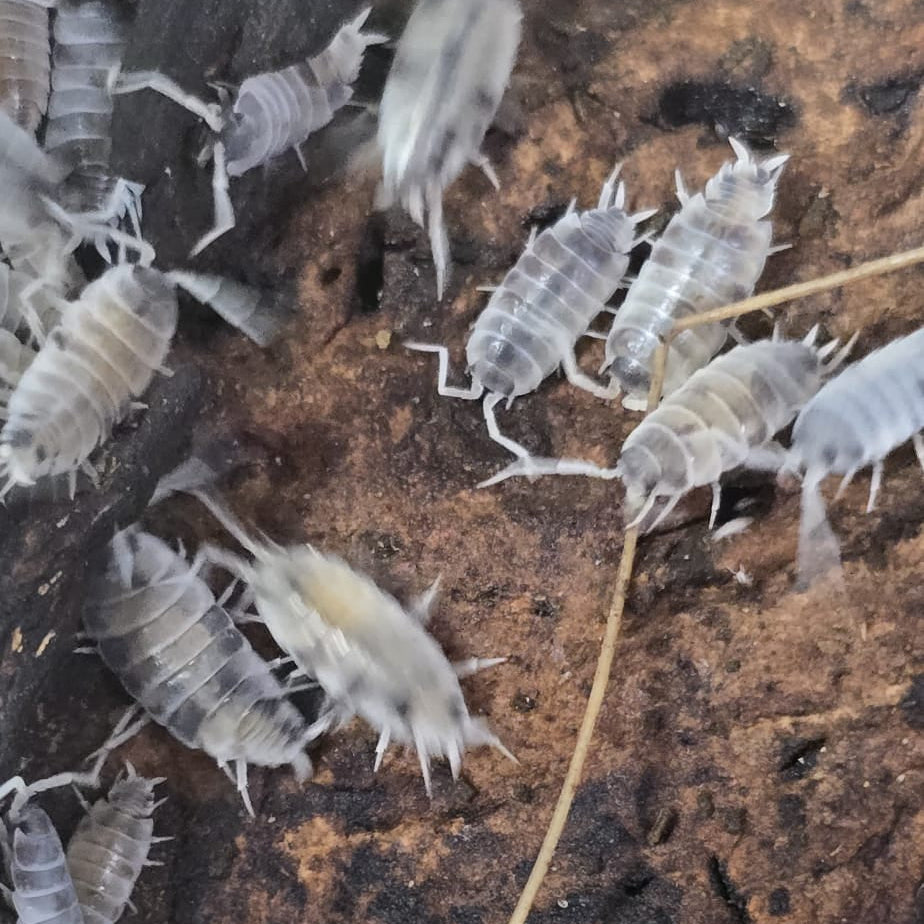
A piebald morph of the highly popular Powder line, featuring black or dark grey base colouration with irregular white or cream patches. Fast, prolific, and visually striking, Oreo Crumbles are virtually foolproof to care for, making them ideal for beginners, bioactive setups, or anyone wanting an active, hardy isopod.
Appearance & Behaviour:
- Distinct black/grey and white piebald pattern, with individual variation
- Powdery or velvety exoskeleton texture (“frosted” look)
- Small to medium size, soft-bodied, cannot roll into a ball
- Extremely fast, surface-active, more diurnal than many species
- Juveniles have bolder, more contrasting colours that soften with age
- Social, non-aggressive, and entertaining to observe
Habitat & Care:
- Enclosure: 3–6 L starter container; larger for established colonies
- Substrate: Moisture-retentive mix of peat/coir, topsoil, sphagnum moss, leaf litter, decaying wood, optional earthworm castings; depth ~5–7 cm
- Moisture: Gradient preferred—one damp area and a drier zone for self-regulation
- Temperature: 18–29 °C; room temperature usually sufficient
- Ventilation: Small holes for moderate airflow; avoid stagnant, overly moist conditions
- Hides: Cork bark, leaf litter, decaying wood
- Lighting: Low, but Oreo Crumbles are more visible in daylight than many isopods
Diet & Nutrition:
- Primary: Hardwood leaf litter, decaying softwood, rotting bark
- Supplementary: Vegetables (carrot, cucumber, courgette, sweet potato), occasional fruit, fish flakes/shrimp for protein
- Calcium: Cuttlebone, limestone chips, crushed eggshells, calcium powder
- Feeding: Remove uneaten fresh food within 24–48 h; permanent leaf litter and decaying wood available
Breeding:
- Extremely prolific; rapid colony growth once established
- Females carry eggs in visible marsupium; sub-adults breed early
- Potentially explosive population growth under ideal conditions
- Lifespan: ~11–14 months in the wild; slightly longer in captivity
Bioactive Use:
- Excellent for bioactive cleanup crews in tropical, temperate, reptile, amphibian, or display enclosures
- Voracious feeders; consume waste, decaying matter, and mould
- Rapid reproduction maintains stable populations
- Surface-active, making waste processing efficient
- Soft bodies are occasionally consumed by insectivorous pets, which can help population control
Comparisons & Morph Relations:
- Part of a large group of P. pruinosus morphs: Powder Blue, Powder Orange, Orange Cream, White Out, Red Koi
- Shares care requirements with all other morphs, but offers striking black-and-white piebald visual appeal
- Can interbreed with other morphs if colonies are mixed
Who Are They For?
- Beginners wanting a forgiving first species
- Bioactive enthusiasts needing fast, prolific cleanup crews
- Keepers seeking visible, active colonies
- Children (under supervision) learning about isopods
Who They Might Not Suit:
- Those wanting large, slow-moving, display-focused specimens
- Keepers looking for rare or unusual species
Care Level: Very Easy; forgiving, hardy, and almost impossible to fail
Share