1
/
of
1
invertopia
Porcellio laevis “Orange” (Giant Orange Isopods)
Porcellio laevis “Orange” (Giant Orange Isopods)
Regular price
£3.50
Regular price
Sale price
£3.50
Taxes included.
Shipping calculated at checkout.
Quantity
Couldn't load pickup availability
Porcellio laevis “Orange” (Giant Orange Isopods)
Origin: Europe (possibly North Africa originally)
Temperature: 16–32 °C
Humidity: 55–75 %
Adult Size: 18–23 mm
Difficulty: Easy
Rarity: Very Common
Description:
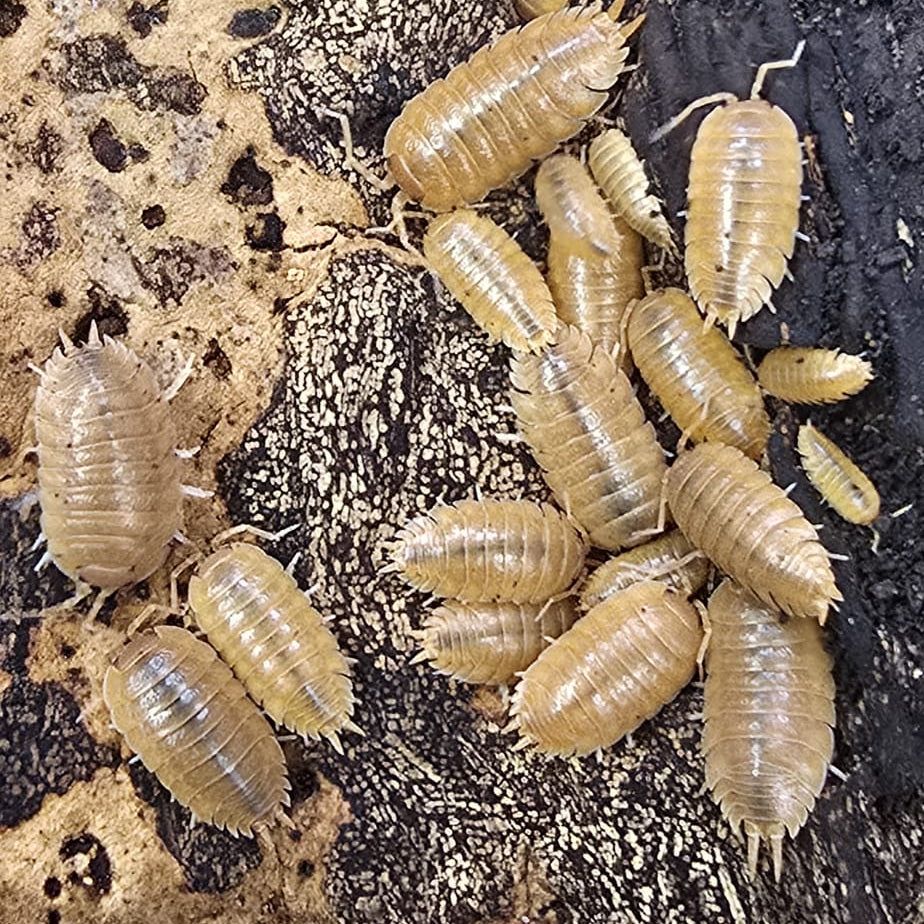
Porcellio laevis “Orange” is a hardy, visually striking orange morph of the smooth-bodied laevis. Known for its prolific breeding, large appetites, and reliability, it is widely used in bioactive setups, as cleanup crew, or as a feeder colony for reptiles and amphibians.
Appearance & Behaviour:
- Adults 18–23 mm, flat, smooth, and glossy exoskeleton
- Bright orange colouration with subtle white highlights
- Cannot fully conglobate due to flat body shape
- Bold, confident, active, and diurnal—visible during daytime
- Calcium-rich exoskeleton suitable for feeders
- Social, tolerate crowding, assertive at feeding time
Habitat & Care:
- Enclosure: Plastic containers with ventilated lids; start small and upsize as colonies grow
- Substrate: 8–10 cm deep mix of organic topsoil, sphagnum peat, crushed limestone or calcium powder, hardwood leaf litter, and decaying wood
- Moisture: Maintain a moisture gradient (damp and slightly drier areas); mist as needed; tolerate moderate humidity fluctuations
- Ventilation: Medium to high ventilation; small holes above substrate level
- Temperature: 16–32 °C; very adaptable
- Hides & décor: Cork bark, coconut shells, egg cartons, moss patches, and hardwood leaf litter
- Springtails: Recommended to control mould in damp areas
Diet & Nutrition:
- Primary foods: Decaying leaf litter, rotting hardwood, decaying organic matter
- Supplementary foods: Vegetables (carrot, squash, courgette, sweet potato), mushrooms, fish flakes, dried shrimp, greens
- Calcium: Cuttlefish bone, crushed limestone, oyster shell, or calcium powder; crucial for moulting and reproduction
- Protein: Fish flakes, dried shrimp; provide at least twice weekly for active growth and breeding
- Feeding: Large appetites; distribute food in multiple locations to avoid competition; remove uneaten fresh food within 24–48 h
Breeding:
- Reproduction: Fast and prolific; colonies grow rapidly
- Sexing: Males slender; females broader with visible marsupium
- Behaviour: Females carry eggs in brood pouch; juveniles emerge ready to explore
- Colony growth: Expect rapid increase under good conditions; ideal for cleanup crews and feeder colonies
- Tips: Ensure adequate food and calcium; robust species that breed reliably with minimal care
Bioactive Use:
- Excellent for reptile and amphibian bioactive setups, invertebrate enclosures, and planted vivariums
- Advantages: Efficient decomposers, hardy across wide temperature/humidity ranges, visually attractive, large appetites, prolific breeders
- Considerations: Assertive nature may outcompete timid species; active movement may startle some animals
Suitability:
- Excellent choice for beginners, bioactive setup maintenance, feeder colonies, large-scale projects, or those wanting bold, active isopods
- Not ideal if rare, shy, or slow species are desired
Care Level: Very low difficulty; hardy, forgiving of minor mistakes, resilient to temperature and humidity fluctuations.
Share