1
/
of
1
invertopia
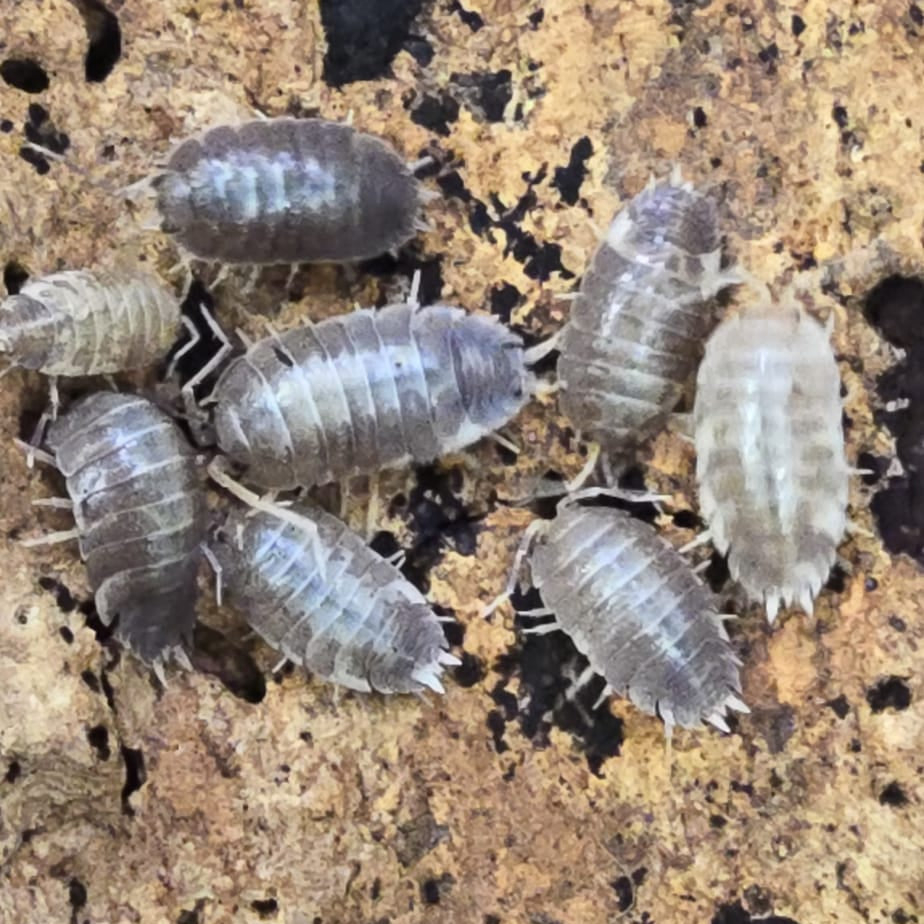
Porcellio laevis “Milk Back”
Porcellio laevis “Milk Back”
Regular price
£2.50
Regular price
Sale price
£2.50
Taxes included.
Shipping calculated at checkout.
Quantity
Couldn't load pickup availability
Porcellio laevis “Milk Back”
Origin: Europe (Captive Bred)
Temperature: 18–26 °C
Humidity: 60–80 %
Adult Size: ~20 mm
Difficulty: Easy
Rarity: Common
Description:
Porcellio laevis “Milk Back” is a hardy, beginner-friendly isopod known for its smooth, glossy exoskeleton and striking milky-white patches on a grey base colour. They are prolific breeders, active, and excellent for bioactive setups or as feeder colonies.
Appearance & Behaviour:
- Adults ~20 mm, smooth and glossy
- Grey base with prominent white patches; contrast intensifies with maturity
- Cannot conglobate (roll into a ball)
- Active and fast-moving; bold, easy to observe
- Peaceful and social; compatible with other isopods
- Escape predators via speed and agility
Habitat & Care:
- Enclosure: At least 5 L for 10–15 individuals; small ventilation holes or mesh panels
- Substrate: 5–7 cm layer of organic topsoil, hardwood leaf litter, rotting wood, and bark
- Moisture: Maintain a moisture gradient; one side slightly damp, other slightly drier
- Temperature: 18–26 °C; ideal for standard UK room temps
- Humidity: 60–80%; misting and proper ventilation maintain balance
- Hides & décor: Hardwood bark, leaf litter, and rotting wood provide shelter and food
- Calcium: Cuttlebone, crushed eggshells, or similar sources for moulting and reproduction
Diet & Nutrition:
- Primary foods: Hardwood leaf litter, decaying wood, decomposing organic matter
- Supplementary foods: Carrot, sweet potato, courgette, fish flakes, dried shrimp, specialized isopod food
- Feeding frequency: Vegetables twice weekly; protein once weekly
- Remove uneaten fresh food after 48 h to prevent mould
Breeding:
- Prolific breeders: females produce 20–40 young every 2–3 months
- Juveniles emerge as miniature adults; no special care needed
- Stable conditions, adequate food, and moisture support rapid colony growth
- Excellent for bioactive cleanup crews and feeder colonies
Bioactive Use:
- Ideal for terrariums, vivariums, and substrate aeration
- Efficient at decomposing waste and maintaining substrate health
- Compatible with multiple other isopod species
Suitability:
- Perfect for beginners or expanding collections
- Hardy, forgiving, and visually attractive
- Active and entertaining for observation
- Excellent for bioactive setups and as feeder colonies
Care Level: Very easy; forgiving of minor mistakes and adaptable to moderate conditions.
Share