invertopia
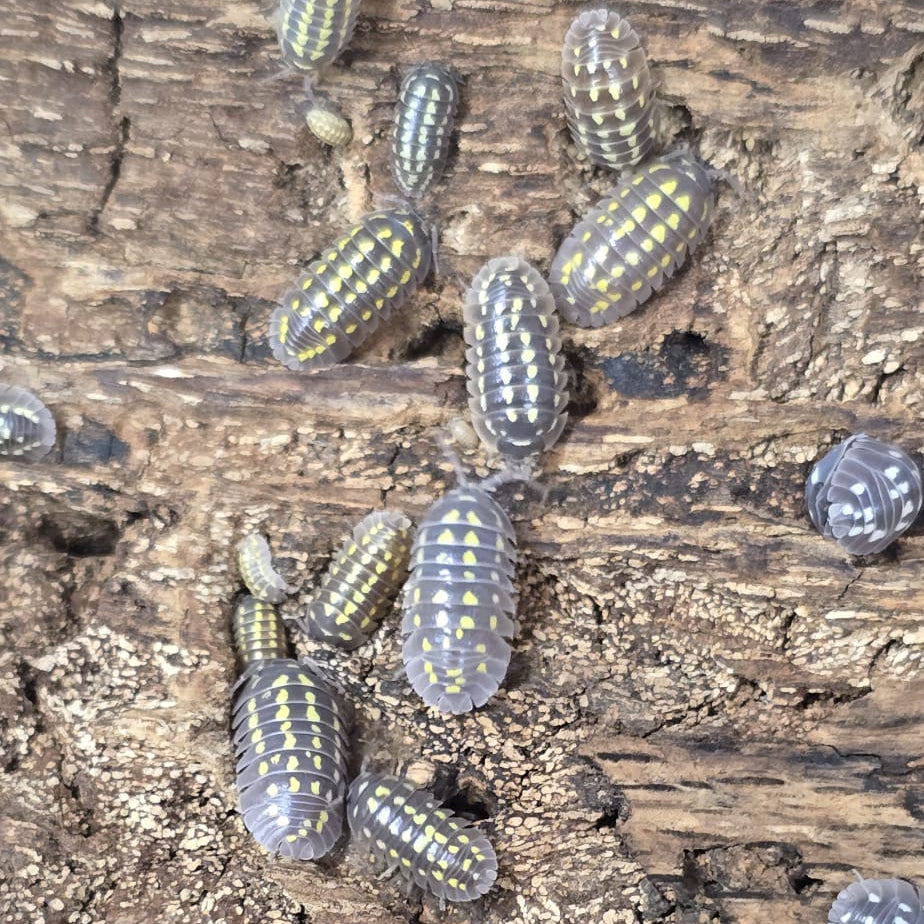
High Yellow Spotted Giant Isopods
High Yellow Spotted Giant Isopods
Couldn't load pickup availability
Care Info
- Origin: France & Italy
- Temperature: 20–26°C
- Humidity: 60–80%
- Size: ~20 mm
- Difficulty: Easy
- Rarity: Common
Product Description (Now With More Personality)
If regular isopods are the background extras… High Yellow Spotted Giant Isopods are the main characters.
With bold neon-yellow spots splashed across a dark body, these little guys look like someone let a graffiti artist loose on a pill bug. The result? One of the most eye-catching isopods in the hobby—and yes, people will lean in for a closer look.
They’re chunky, confident, and once settled in, surprisingly active. Not content with hiding 24/7 like some species, gestroi will actually come out and strut around like they know they’re the best-looking thing in the enclosure.
Why You’ll Like Them (Even If You Didn’t Plan To)
- Bright yellow spots that look almost painted on
- Big for an isopod—basically the “XL edition”
- Roll into perfect little armoured balls when startled
- More visible than most species (less hiding, more showing off)
- Low maintenance, high aesthetic payoff
Personality & Behaviour
At first, they’re a bit shy. Give them time.
New colonies may act like introverts at a party—quiet, hidden, and pretending not to exist. But once established? Completely different story.
They’ll be out exploring, climbing over cork bark, and casually existing like tiny armoured cows grazing on leaf litter.
They’re peaceful, social, and have zero interest in drama. No fighting, no chaos—just vibes.
Housing (Their Fancy Dirt Mansion)
- Small tub or terrarium = perfect starter home
- Lots of leaf litter (this is food and furniture)
- Cork bark hides = essential real estate
- Keep one side moist, the other drier (they like options)
Think of it as giving them a humidity gradient buffet.
Feeding (Professional Decomposers)
These guys eat what nature intended: dead stuff.
Main diet:
- Leaf litter (their absolute favourite)
- Rotting wood
- Moss
Treats (because they deserve it):
- Veg (carrot, courgette, sweet potato)
- Fruit (occasionally—don’t turn it into a fruit salad situation)
- Protein (fish flakes, dried shrimp = isopod fine dining)
⚠️ Rule: If it starts growing mould before they eat it, you gave them too much.
Special Requirements (a.k.a. Their Calcium Obsession)
These isopods come from limestone-rich habitats, which means:
👉 They love calcium
👉 They need calcium
👉 They will absolutely seek it out like tiny mineral collectors
Add:
- Cuttlebone
- Crushed eggshell
- Limestone
Think of it as their version of a multivitamin.
Breeding (Slow Burn → Population Boom)
These aren’t speed breeders… at first.
You might think:
“Are they even doing anything?”
Then suddenly:
“Why are there 100 tiny babies?”
They take time to establish, but once they do, they produce huge broods. Patience pays off.
Is This Species Right for You?
✔ You want something colourful and different
✔ You enjoy actually seeing your isopods
✔ You don’t mind waiting a bit for them to get going
✖ You want instant population explosions
✖ You forget to remove old food (mould city incoming)
Final Thoughts
Armadillidium gestroi are bold, beautiful, and just the right amount of extra.
They start off shy, then turn into confident little show-offs with a taste for leaf litter and calcium. If you want an isopod that stands out instead of blending in, these are an easy win.
Plus, they roll into tiny balls. Never gets old.
Share