1
/
of
1
invertopia
Cubaris sp. “Piggy”
Cubaris sp. “Piggy”
Regular price
£40.00
Regular price
Sale price
£40.00
Taxes included.
Shipping calculated at checkout.
Quantity
Couldn't load pickup availability
Cubaris sp. “Piggy”
Origin: Southeast Asia
Temperature: 21–27 °C
Humidity: 70–80 %
Adult Size: Up to 12 mm (1.2 cm)
Difficulty: Easy
Rarity: Rare
Scientific Name: Cubaris sp. “Piggy”
Description:
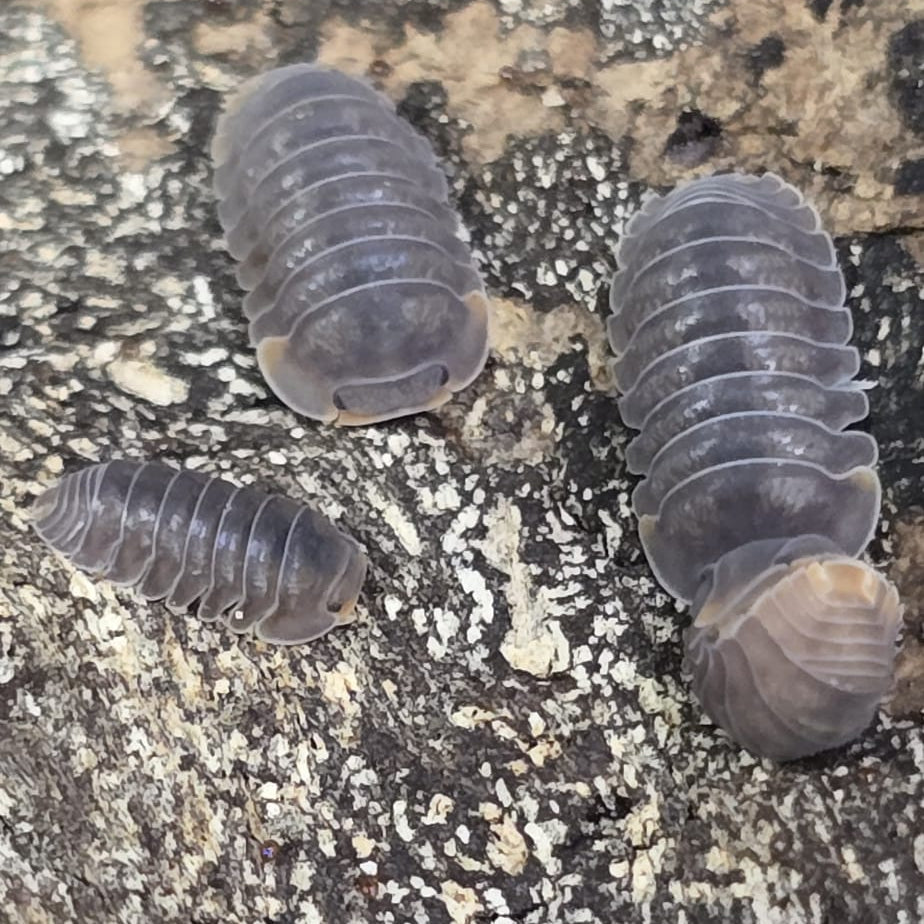
Small, cute Cubaris isopods prized for their approachable care requirements. Mostly gray or brown, they may occasionally show unique patterns, but color variation is uncommon. Their rarity makes them a sought-after addition for hobbyists.
Appearance & Behaviour:
- Oval, segmented body, hard exoskeleton
- Gray or brown coloration; occasional unique hues
- Size: ~1.2 cm, small and compact
- Nocturnal; most active at night
- Rolls into a defensive ball (conglobation) when threatened
- Shy and secretive; burrows in substrate to feel secure
Habitat & Care:
- Container: Secure, ventilated terrarium or bioactive vivarium
- Substrate: Moisture-retentive mix of coconut fiber, sphagnum moss, peat moss, dried leaves, decaying wood
- Depth: Sufficient for burrowing and hiding
- Moisture: Keep substrate damp but avoid waterlogging; mist as needed
- Temperature: 21–27 °C, stable conditions preferred
- Humidity: 70–80 %
Feeding & Nutrition:
- Diet: Detritivorous—leaf litter, decaying wood, overripe fruits/vegetables
- Calcium: Cuttlebone, crushed eggshells, limestone for exoskeleton health
- Small, regular feedings prevent spoilage and pests
Breeding:
- Establishment: Moderate; colony needs stable environment to settle
- Reproduction: Typical Cubaris pattern—females carry eggs in marsupium
- Deep substrate encourages burrowing and successful reproduction
Bioactive Use:
- Can contribute to tropical or humid vivariums
- Breaks down detritus and decaying matter efficiently
- Adds visual and behavioural interest in bioactive colonies
Suitability:
- Good for: Hobbyists seeking rare, easy-to-care-for Cubaris, small display colonies, nocturnal species for observation
- Less suitable for: Beginners unable to maintain consistent humidity, those wanting highly visible, colorful species
Share