1
/
of
1
invertopia
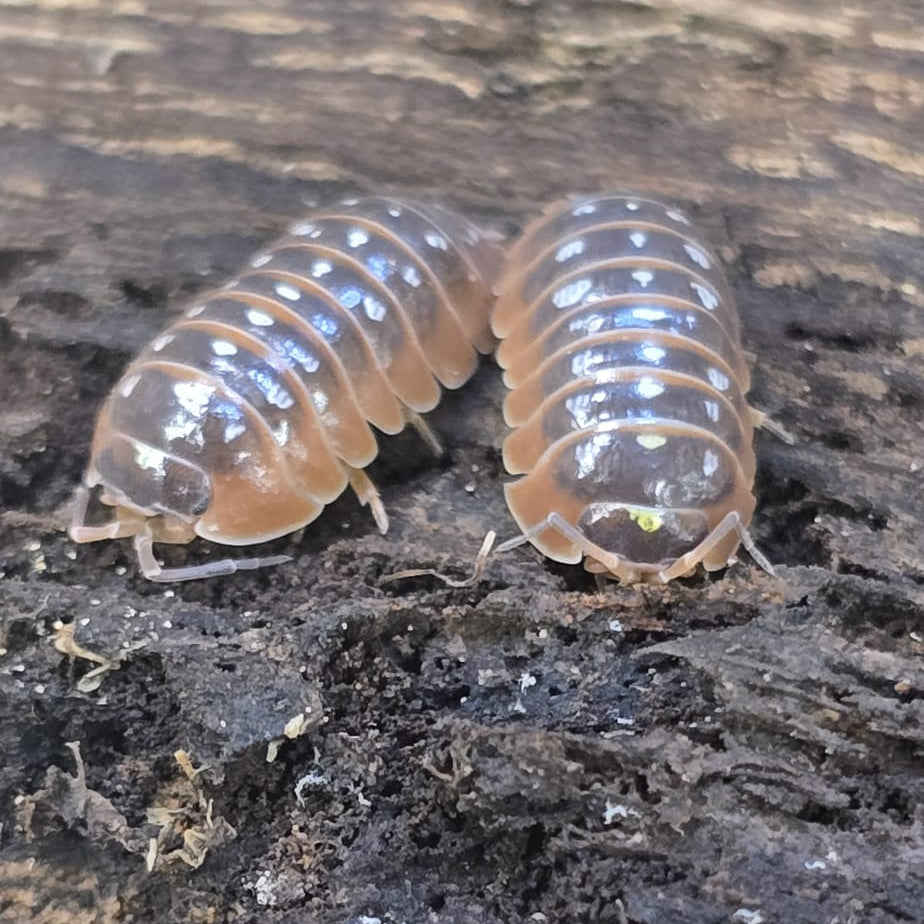
Clown 'Montenegro' Isopods (Armadillidium Klugii)
Clown 'Montenegro' Isopods (Armadillidium Klugii)
Regular price
£10.00
Regular price
Sale price
£10.00
Taxes included.
Shipping calculated at checkout.
Quantity
Couldn't load pickup availability
Armadillidium klugii ‘Montenegro’ (Clown Isopods)
Origin: Montenegro & Adriatic Coast
Temperature: 21–27 °C (23–26 °C optimal for breeding)
Humidity: 30–50 % (with moisture gradient)
Adult Size: ~18 mm
Difficulty: Easy
Rarity: Common
Product Description:
Clown Isopods (‘Montenegro’) are highly striking Armadillidium species, easily recognised by their dark bodies edged with red “skirts” and scattered yellow or cream spots. Their unique colouration is thought to mimic the Mediterranean black widow spider, providing protection via predator deterrence. Despite their dramatic appearance, they are shy, secretive, and prefer to stay hidden.
Appearance & Behaviour:
- Dark grey to black base colour with red-edged segments and yellow/cream spots
- Adults ~18 mm; can roll into a tight, complete ball (conglobation) when threatened
- Shy and nocturnal; most active at night
- Social, living in clusters, peaceful with other tankmates
- Slow to establish; colonies may take 3–4 months to start breeding
Habitat & Care:
- Suited to semi-arid enclosures; prefer a moisture gradient
- ~1/3 of enclosure damp (sphagnum moss, ABG substrate)
- ~2/3 dry to bone-dry (coir, sand, dry leaf litter)
- Deep substrate (≥5 cm) for burrowing and hiding
- Ventilation is crucial to prevent mould and colony crashes
- Avoid uniform humidity; drier setups are essential
- Temperature: 21–27 °C, higher end promotes breeding
- Provide plenty of hiding spots: cork bark, rotting wood, leaf litter
Diet & Nutrition:
- Primary: decomposed hardwood leaves (oak, magnolia), soft rotting wood, bark, sphagnum moss
- Supplementary: fresh vegetables 1–2× weekly (carrots, courgette, cucumber), soft plants, protein (fish flakes, dried shrimp, mealworms), commercial isopod foods
- Calcium: cuttlebone, crushed eggshells, calcium powder (constant availability)
Breeding:
- Females carry eggs in a marsupium; release live young (manca) after 3–4 weeks
- Slow starters: 3–4 months before seeing offspring in new colonies
- Breeding activity peaks in warmer months
- Stable temperature, proper moisture gradient, calcium, and protein are key for success
- Adding fresh bloodlines and new substrate every 6–12 months helps maintain colony health
Value:
- Excellent for bioactive setups requiring drier isopods
- Striking visual appeal without aggressive behaviour
- Hardy and peaceful once established, but patience is required during initial acclimation
Share